200 amp vs 150 amp panel upgrade: which is right for your home
Choosing between a 200 amp and 150 amp panel upgrade in Rocky Mount NC? We compare capacity, costs, and code requirements so you pick the right size.
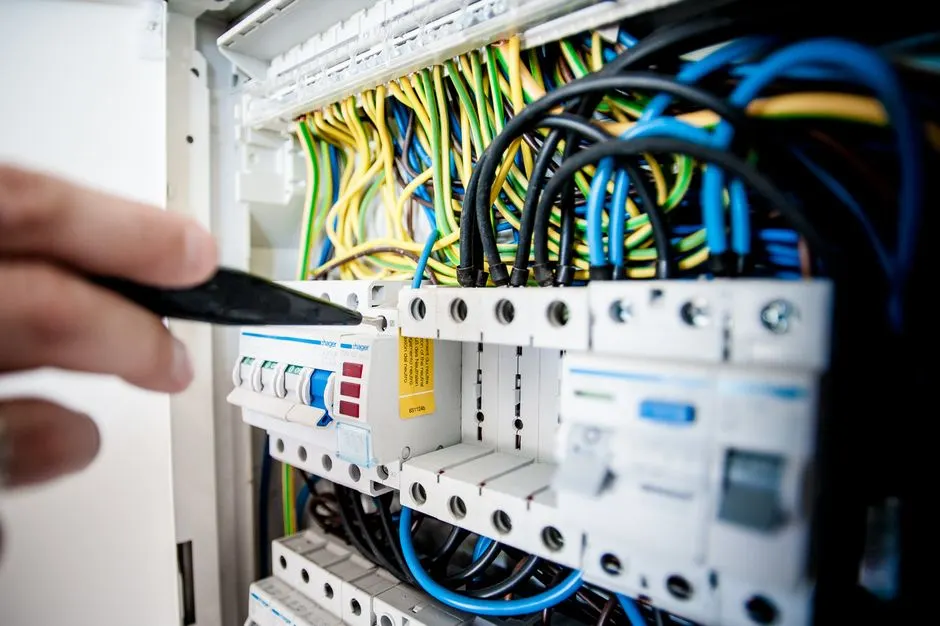
For most homes in Rocky Mount, a 200 amp panel is the better choice if you have central air, an electric range, or plans to add an EV charger or heat pump. A 150 amp panel can work for smaller homes with gas appliances and no heavy electric loads. The rest of this post breaks down the 200 amp vs 150 amp panel upgrade Rocky Mount NC decision so you can pick the right size without overspending or underpowering your house.
We install and replace panels across Rocky Mount every week, and the question we hear most is simple: do I really need 200 amps, or will 150 do? Here is how we walk homeowners through it.
The short answer: 200 amp vs 150 amp panel upgrade Rocky Mount NC
If your home is 1,800 square feet or larger, has central air conditioning, and uses electricity for cooking, water heating, or space heating, go with 200 amps. If your home is under 1,500 square feet, uses natural gas or propane for the big appliances, and has no plans for an EV or heat pump, a 150 amp panel is often enough.
That is the 30-second version. The longer answer depends on your actual load calculation, which any licensed electrician can run in about 20 minutes. We do this on every Electrical Panel Inspection Rocky Mount NC before quoting a size, because guessing leads to callbacks and nuisance breaker trips.
A 200 amp vs 150 amp panel upgrade Rocky Mount NC is really a question about capacity headroom. The panel itself is a metal box with a main breaker and slots for branch breakers. The amp rating tells you how much current the whole service can carry before the main breaker trips. Everything downstream - wire size, meter base, service entrance conductors - has to match that rating.
What is the difference between a 200 amp and 150 amp panel?
The difference is 50 amps of capacity, which translates to roughly 12,000 watts of additional load at 240 volts. That is enough to run a 3-ton central air conditioner, a 30-amp EV charger, or a 4.5 kW heat pump simultaneously with your existing appliances.
In practical terms, a 150 amp panel gives you about 36,000 watts of total capacity. A 200 amp panel gives you about 48,000 watts. Modern homes with electric everything routinely brush up against 36,000 watts on a cold morning when the heat strips, water heater, dryer, and oven all kick on at once.
Here is what that looks like in real numbers:
- 150 amp panel: 36,000 watts total. Handles a 1,200-1,500 sq ft home with gas heat, gas range, and gas water heater.
- 200 amp panel: 48,000 watts total. Handles a 2,000-3,000 sq ft home with electric heat, electric range, electric water heater, and central AC.
- 200 amp panel with headroom: Leaves 8,000-12,000 watts open for an EV charger (7,200 watts), a heat pump (4,500 watts), or a workshop subpanel.
One more difference that matters: physical size. A 200 amp panel is typically 14.25 inches wide and 34 inches tall. A 150 amp panel is often the same width but shorter, around 30 inches. If your existing panel is recessed into a finished wall, the new one has to fit the same opening or we have to patch drywall.
We also check the meter base and service entrance mast on every quote. A 150 amp service often uses a smaller meter base and 1/0 aluminum service conductors. A 200 amp service needs a 200 amp meter base and 2/0 aluminum or 1/0 copper. If those are undersized, the upgrade includes replacing them - that is part of a 200 Amp Electrical Service Upgrade Rocky Mount NC.
How to choose between 200 amp and 150 amp panel in Rocky Mount North Carolina
Run a load calculation first, then add 25% headroom for future additions. That is the rule we use on every home in Rocky Mount, and it keeps homeowners from paying twice for the same upgrade.
Here is the step-by-step we walk through:
- List every 240-volt load. Central AC, heat pump, electric range, electric water heater, dryer, EV charger, welder, hot tub. Each one gets its nameplate wattage.
- Add the 120-volt loads. Lights, outlets, microwave, dishwasher, disposal, refrigerator. The National Electrical Code lets you apply demand factors here, which is why a 2,000 sq ft home does not need 400 amps.
- Apply the NEC demand factors. The first 10 kVA of range load counts at 100%, the rest at 40%. Heating and cooling are compared and the larger one counts. This is where a Electrical Load Calculation Rocky Mount NC earns its keep.
- Compare the total to 36,000 watts (150A) and 48,000 watts (200A). If you are within 80% of 36,000, go 200. If you are under 28,000 and have no plans to add load, 150 is fine.
We see this play out differently by neighborhood. In electrical panel upgrade in Englewood, the housing stock runs older - many homes were built in the 1950s and 1960s with 60 amp or 100 amp fuse boxes. Those homes almost always need a full service upgrade to 200 amps because the existing wire and meter base cannot support anything larger. In the newer subdivisions off Sunset Avenue, homes built in the 2000s often have 150 amp panels that are fine until the homeowner adds an EV charger.
If you are already at 100 amps and trying to decide, the jump to 200 is almost always the right call. The cost difference between a 100 Amp to 200 Amp Panel Upgrade Rocky Mount NC and a 150 amp upgrade is small - usually a few hundred dollars in material - and the resale value and future-proofing are worth it.
Cost difference: 200 amp vs 150 amp panel Rocky Mount NC
In 2026, a 150 amp panel upgrade in Rocky Mount typically runs $1,800 to $2,600 installed. A 200 amp upgrade runs $2,200 to $3,400. The $400-$800 gap covers the larger main breaker, heavier service conductors, and a 200 amp meter base.
Those ranges assume a straightforward swap: same location, no mast replacement, no drywall repair, no permit complications. Here is what pushes the number up:
- New service mast and weatherhead: $400-$900 if the existing mast is rusted or undersized.
- Meter base replacement: $300-$600. Required if you go from 150 to 200 and the old base is rated 150.
- Grounding and bonding upgrade: $250-$500. Older homes often have a single ground rod and no water bond. Current code requires two ground rods and a bond to the water line within 5 feet of entry.
- AFCI and GFCI breakers: $40-$80 per breaker. Most 2026 panel replacements include AFCI for bedroom circuits and GFCI for kitchen, bath, garage, and exterior.
- Drywall repair: $150-$400 if the new panel is a different size than the old one.
Permits in Rocky Mount run $75-$150 for a residential panel change, and the inspection is usually scheduled within 2-3 business days. We pull the permit, meet the inspector, and handle the utility disconnect and reconnect. You do not have to coordinate any of that.
One thing homeowners ask about constantly: does the utility charge for the disconnect and reconnect? Yes - Rocky Mount's utility typically charges $50-$100 for a temporary disconnect and $50-$100 to reconnect. That is separate from our invoice and goes on your utility bill.
When a 150 amp panel is enough
A 150 amp panel is enough when your calculated load stays under 28,000 watts and you have no plans to add major electric loads in the next 5-7 years. That describes a lot of Rocky Mount homes.
Typical profile where 150 amps works:
- 1,200-1,500 sq ft single-story home
- Natural gas furnace, gas water heater, gas range
- Window units or a single 2-ton central AC
- No EV, no hot tub, no workshop
- Panel is in a garage or utility room with room to work
If that is your house, a 150 amp panel will serve you well for years. We still recommend 200 amps if the price gap is small and the service entrance needs replacing anyway - but we will not push you into capacity you do not need.
One caveat: if your home was built before 1970 and still has a 60 amp or 100 amp fuse box, a 150 amp upgrade is a half-measure. The wire, meter base, and grounding all have to be brought up to current code regardless, and the labor is nearly identical to a 200 amp job. In that case, we almost always recommend going straight to 200. You can read more about that path on our Fuse Box to Breaker Panel Conversion Rocky Mount NC page.
When you need a 200 amp upgrade
You need 200 amps if your calculated load exceeds 36,000 watts, if you are adding an EV charger or heat pump, or if your home is over 2,000 square feet with electric appliances. Those are the three triggers we see most often.
Specific situations that push homeowners to 200 amps:
- EV charger installation. A Level 2 charger pulls 32-48 amps continuously. That is 7,680-11,520 watts. A 150 amp panel with electric heat and AC cannot absorb that. We handle this regularly with an Electrical Panel Upgrade for EV Charger Rocky Mount NC.
- Heat pump replacement. Switching from gas to a cold-climate heat pump adds 4,000-6,000 watts of continuous load. If you are already near 30,000 watts, that tips you over.
- Home addition. Adding a bedroom, bathroom, or in-law suite adds circuits. A 400 sq ft addition typically adds 3,000-5,000 watts of calculated load.
- Electric tankless water heater. These pull 80-120 amps on their own. They need a dedicated 200 amp service or a subpanel fed from a 400 amp service.
- Workshop or garage subpanel. A welder, compressor, or table saw draws 20-50 amps. A Subpanel Installation Rocky Mount NC fed from a 200 amp main is the clean way to do it.
We also recommend 200 amps whenever the existing panel is a known hazard. Federal Pacific Stab-Lok and Zinsco panels have documented failure rates and are not considered safe. If you have one of those, the replacement is not optional - and while we are in there, going to 200 amps costs very little extra. Our Federal Pacific Panel Replacement Rocky Mount NC and Zinsco Electrical Panel Replacement Rocky Mount NC pages cover those in detail.
Common mistakes we see in Rocky Mount
The most expensive mistake is sizing the panel to the house today instead of the house in five years. We see homeowners pay for a 150 amp upgrade, then add an EV charger two years later and pay again for 200 amps. The second job costs more because the first one is now in the way.
Other mistakes:
- Skipping the load calculation. Guessing based on square footage alone misses big loads like a well pump, hot tub, or electric kiln. We run the numbers on every quote.
- Reusing the old meter base. A 150 amp meter base on a 200 amp service is a code violation and a fire risk. We replace it as part of the job.
- Ignoring the service entrance. The mast, weatherhead, and drip loop have to be rated for the new amperage. If the mast is rusted, it has to go.
- Not upgrading grounding. Current code requires two ground rods and a water bond. Older homes often have one rod and no bond. This is a $250-$500 line item that some contractors skip.
- Hiring the lowest bid without checking the permit. If the contractor does not pull a permit, the work is not inspected, and you own the problem when you sell the house.
We also see homeowners try to solve capacity problems with a subpanel when the real issue is the main service. A subpanel does not add capacity - it just splits what you already have. If your main breaker trips when the dryer and AC run together, a subpanel will not fix it. You need a larger service.
When to call a professional
Call a licensed electrician if your main breaker trips more than twice a month, if you see scorch marks or smell burning near the panel, if your lights dim when the AC kicks on, or if you are planning any of the load-adding projects above. Those are not DIY repairs.
Panel work involves the utility disconnect, the meter, the service entrance, and the main bonding jumper. In North Carolina, a homeowner can pull a permit for their own primary residence in some jurisdictions, but the utility will not reconnect without an inspection, and the inspection requires the work to meet current code. In practice, almost every panel upgrade in Rocky Mount is done by a licensed electrical contractor.
We handle the whole sequence: load calculation, permit, utility disconnect, removal and disposal of the old panel, installation of the new one, grounding and bonding, breaker installation, inspection, and utility reconnect. You get one point of contact and one invoice. If you want a straight answer on 200 amp vs 150 amp for your specific house, we will run the numbers and tell you which one you actually need.
Frequently Asked Questions
Should I upgrade to 200 amp or 150 amp panel in Rocky Mount NC?
Go with 200 amps if your home is over 1,800 sq ft, has central AC and electric appliances, or you plan to add an EV charger or heat pump. Choose 150 amps if your home is under 1,500 sq ft with gas appliances and no major additions planned. When in doubt, 200 amps gives you headroom for about $400-$800 more.
What is the difference between 200 amp and 150 amp panel in Rocky Mount North Carolina?
A 200 amp panel carries 48,000 watts; a 150 amp panel carries 36,000 watts. That 12,000-watt difference is enough to run central AC plus an EV charger simultaneously. The 200 amp panel also uses a larger meter base and heavier service conductors.
How much does 200 amp vs 150 amp panel upgrade cost in Rocky Mount NC?
In 2026, a 150 amp upgrade runs $1,800-$2,600 installed. A 200 amp upgrade runs $2,200-$3,400. The gap covers the larger main breaker, heavier conductors, and a 200 amp meter base. Add $300-$900 if the service mast or grounding needs replacement.
Which panel size is best for my home in Rocky Mount?
Run a load calculation. If your total load is under 28,000 watts with no planned additions, 150 amps is fine. If it is over 28,000 watts, or you are adding an EV, heat pump, or home addition, choose 200 amps. We calculate this free on every quote.
Do I need a permit for a panel upgrade in Rocky Mount NC?
Yes. Rocky Mount requires an electrical permit for any panel replacement or service upgrade. Permits run $75-$150 and inspections are typically scheduled within 2-3 business days. The utility will not reconnect power without a passed inspection.
Get help with Electrical Panel Upgrade in Rocky Mount
If you are still unsure whether your home needs 200 amps or 150 amps, we will run the load calculation and give you a straight answer - no pressure to upsize if 150 is genuinely enough. We serve Rocky Mount and the surrounding areas, and we handle the permit, the utility coordination, and the inspection.
Call Rocky Mount Panel Pros at (252) 701-2054 to schedule your panel evaluation.